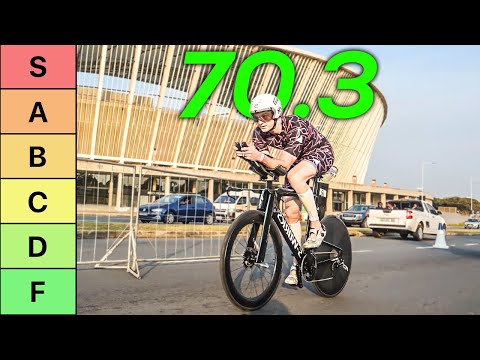

I qualified for Kona in 2022 on an average of about 10 hours a week. That was possible because I had some years of base behind me, but life dictated that I couldn't train like I used to. I had kids and a busy lifestyle. If that's your situation, you're in the right place.
Let's face it: the biggest commodity we want isn't money, it's time. When you're training for triathlon with a family and a busy lifestyle, you have to be very good with your time management. This article is exactly what I did across swim, bike, run and gym, including how I fitted a week together. If you want the general template rather than my own week, read Sub-10 Ironman Training on 10 Hours a Week.
The fundamentals are a consistent, week-in, week-out approach. It's no good doing one week of 20 hours, the next week 8, then a big week of 15. The body loves repetition. If you can stick to 10, 11 or 12 hours, that range I believe is pretty good, and it was usually 10 to 11 hours, sometimes 9, occasionally 12, depending on where I was in the cycle. Remember it's accumulated load, not every week.
My Kona Training Week at a Glance
- Monday: threshold swim, plus 30 minutes of gym.
- Tuesday: 1 hour bike strength session (low cadence, big torque).
- Wednesday: 12 to 15 km hilly tempo run.
- Thursday: swim with pull buoy and paddles (45 to 60 minutes, long reps), plus 30 minutes of gym.
- Friday: 1 hour VO2 bike intervals.
- Saturday: 3 to 4 hour long ride with race-pace intervals, followed by a 6 to 12 km brick run at Ironman pace.
- Sunday: long run of up to around 2 hours with threshold repeats.
- Optional: a 30-minute easy jog, if there is space and the legs feel fine.
That adds up to roughly 2 to 3 hours of running a week, three rides, two swims and two short gym sessions. Here's why each piece is there.
Swim: Two Quality Sessions a Week
I only swam twice a week. Believe it or not, I didn't do four or five. Yes, swimming more builds really good aerobic fitness and specificity for the swim leg, but I'd rather spend the time elsewhere than on the small marginal gains from the smallest part of the race. So the swim training had to be super high quality, and I had to be super consistent every week without fail, certainly through the 12 to 16 week block leading into the Ironman.
Each swim was 45 to 60 minutes: good quality, get in, get out. I didn't spend more than that in the pool, twice a week.
Swim 1: threshold (CSS)
One swim was based around CSS, or threshold swimming: critical swim speed, to get that pace. To find it you do a 400 m and a 200 m time trial. There's a lot of information on this linked to my training plans, and the swim calculator on this site works it out for you. In a 45-minute session, the work at threshold wouldn't be longer than 20 to 30 minutes.
Swim 2: strength with pull buoy and paddles
The second swim was longer and strength-focused, using a pull buoy and paddles. These were longer efforts to build real resilience for the arm conditioning, so that when I got to the 4 km race swim I had a lot of strength built up with low-heart-rate, very aerobic training. I'd trash my arms: 400s and above, long endurance, with the effort closer to tempo. Bear in mind I only swam above race pace in the first swim.
Gym: Thirty Minutes Tagged On After the Swim
I tagged 30 minutes of gym on after each swim. You're already at the pool, so you can go upstairs, which is a really good use of your time. You've already warmed up, and the body is nice and mobile.
Injury prevention is the main goal here, plus strength that carries over to your specific sport. Otherwise you're just going for vanity guns. I focused on my big hitters, and remember we're only going for 30 minutes: you're in, you're out. I was never smashed when I left. If you crawl out of the gym, it's too hard.
- Session 1: squats, a lunge pattern and quite a lot of one-leg work.
- Session 2: a bit more upper body, with a push exercise (anything with weights, or push-ups), some lat work (in a row position or a pull-down position), which helps with swimming and running, and core.
For core, I focused specifically on obliques and the low abdominals. You can do core all day long, but you'll just get strong in the wrong place. These are the muscles that generally get neglected, and the ones that matter for running.
Bike: Three Rides a Week
What takes up the biggest part of your training? You know the answer: the bike. Most of us like to ride, especially when the weather's good, but I never had the opportunity to go for 5 or 6 hour rides regularly. To stay consistent I had to hone in on three rides a week. Sometimes I aimed for four or five, but on average it was three. With swimming and gym already at about two and a half hours, the bike is the bulk of the rest of your time.
The long ride: 3 to 4 hours with race-pace intervals
I did one 3 to 4 hour ride, usually closer to 3 to 4 hours than longer. I couldn't just ride easy given the low volume, so I made sure I did quite a bit of race-pace intervals: Ironman effort and above. We're getting the body ready and conditioned for specificity, so when you turn up to your Ironman it's not completely new to you.
It started with 10 minutes and built up to 30-minute durations: for example 4 by 10, 3 by 20, or 2 by 30 minutes, with some nice easy riding in between. All of this was done on the TT bike, carrying over to the specificity of the race. I spent a fair amount of time at my Ironman bike pace (my bike splits were around 5:05, sometimes just under 5 hours), so my body got used to it. Some of the work was also above race pace in shorter durations, which builds really good specific strength.
TT strength: low cadence, big torque
Back to the theme of TT strength. About a one-hour session, which I did on the turbo, with some over-gear work or hill climbing, whatever you want to call it. You can do it indoors and outdoors. Slow, low-cadence, big-torque work carries over to time trialling really well, so the specificity is high, with a really good bang for your buck.
We'd do 2, 4, 6 or 8 minute repeats at 60 to 70 rpm. The heart rate actually stays quite low, but you're building a high power effort, for 30 to 40 minutes of work in total. That's not loads, and it was all in the TT position.
VO2 intervals: never ignore intensity
To go back to my earlier theme of never ignoring intensity, which triathletes tend to do quite regularly, I did the classic VO2 session (maximal volume of oxygen uptake). It's hard, so you have to time it really well in the week. These were 3 to 5 minute reps in a one-hour session: for example 4 by 5 minutes, or 8 by 3 minutes, which was the biggest one. That's 20 to 30 minutes of very hard work, about 7 to 8 out of 10, above your FTP in the severe-domain intensity, depending on which zone model you use.
If you're not very fit, even 30 seconds on, 30 seconds off for 10 minutes will give a similar response. It's quite a lot easier than 3 to 5 minutes, and it softens the legs up a little before the weekend. Because the volume is low, you generally hit your sessions pretty regularly.
Run: Three Runs, Sometimes Four
The run is a really important part of the equation, because no one wants a terrible run leg. The biggest thing I find in coaching is injury, and it normally comes from volume combined with intensity. How hard you run your sessions defines your load, which feeds into your overall training load for the week and adds up cumulatively over your 12 to 16 week plan. This is where most people break down, when the load is too much.
So I kept it simple. I liked to run three or four times a week, though it was more like three. I had to make each session count without getting injured, while still being really specific.
Midweek: a 12 to 15 km hilly tempo run
The key here is hilly tempo. Naturally you go slower up hills, and you build really good specific strength in your glutes and posterior chain. Hill work is speed work in disguise, and it carries over to a flat marathon really well (most Ironman marathons are flat). On the hills I'd push my heart rate up to zone 3 to 4, make sure I really worked, then recover over the top, keeping the speed up while the heart rate dropped. It's a natural area where you just have to use the terrain, or a treadmill.
Sunday: a long run with threshold repeats
Everyone does a long, steady run, but I didn't have to push to 2.5 or 3 hours. My longest run was about 2 hours 20, and I only did that once or twice because I already had quite a bit of volume base. The key was to add some intervals above race pace, which wasn't super stressful and kept the injury risk down. In my 40s I had to watch my calves, hamstrings and ankles, which get really tight.
Within that run I'd do 16 to 28 minutes of repetitions at threshold pace or above, which is above marathon pace. For me that was 4 by 6 to 8 minutes. If I did 6 by 8, I was moving into the 40-minute range, but I only did that once or twice. Generally I worked around 20 to 30 minutes at threshold. Most people can handle more than that, but I didn't do loads more. That's a really good response from within a run of an hour and a half.
Saturday: a brick run at Ironman pace
The third run is the most specific of the lot: getting your legs used to running off the bike. It's a brick run of 6 to 12 km off the bike, at race pace. The distance varied depending on where I was in the cycle. If I knew I could run 12 km at race pace off a really good solid long bike, I was in good shape, always making sure I could have done more. Less is more here.
This is critical: dial into your Ironman pace so your body is conditioned to run at that specific pace. It's slightly faster than your steady pace, and you need to work it out. A coach can do that for you.
The optional fourth run
Because I enjoy running, I'd sometimes slot in a 30-minute easy jog. No junk mileage, but if I needed to flush out the legs on one of the days, or had a bit more space and time, I'd add it. It depends on the weekly load, how your legs are feeling, and your run background, and it all relates back to injury, because running is the one that gets the bad press.
Finding Your Thresholds
You don't necessarily need the gold standard, which is a lab. On the bike, do at least a 20-minute test to find the threshold you could hold for 45 minutes to an hour, unless you have data from a race or a long time trial outside. I'd then work at 90 to 95% of that figure, which gives a really good rough gauge of where your threshold sits. There are loads of different ways of doing it, but I try to keep it simple, and that served me well. Just remember to stay in the right zones.
On the run, find your threshold from a 45 to 60 minute effort. Some people can use a 10K, or you can do a 20-minute test to find your functional threshold pace, a bit like on the bike, and then take 5% off.
How the Week Fits Together
The week starts on Monday with a swim and gym. The swim is threshold, aerobic rather than super hard, and the gym is 30 minutes. We have to think about the legs for Tuesday, so they've recovered from the weekend and you haven't pushed the gym so hard that you can't walk out. The most important thing is that you leave feeling better than when you arrived. You shouldn't be trashed at the gym.
Tuesday we try to hit an hour on the strength bike. Wednesday is the hilly tempo run, between 12 and 15 km. With the legs tired from the last two days, Thursday is the swim with paddles and pull buoy: 45 minutes to an hour, but longer reps of 400s up to 800s depending on your ability, with the heart rate kept down because the body is getting tight. The aim is to get the arms pretty tired, so that when you aim at your target race, you have really good swim-specific strength.
Friday is the second hard bike, the VO2 session. We never want to neglect intensity with Ironman, and certainly when we're doing less volume we want to get above race pace for a lot of the work. This is also how you maintain your VO2, especially as an older athlete. It could be in the TT position indoors, or out on the road if you want to attack a hill. Then the weekend is more endurance-based with a little sprinkle in there: Saturday's long ride and brick, and Sunday's long run.
Monday to Friday, it's not a lot of hours, though there are two sessions on some days. Two to three hours of running a week, coupled with the gym, should get you to the start line in great shape.
Frequently Asked Questions
Can you qualify for Kona on 10 hours a week?
I did, in 2022, on an average of about 10 hours a week. It helped that I had years of base behind me, and it only works with a consistent, week-in, week-out approach. Most weeks were 10 to 11 hours, sometimes 9, occasionally 12.
How many times a week should you swim for an Ironman?
I only swam twice a week, for 45 to 60 minutes each. One was a threshold (CSS) swim and one was a longer strength swim with pull buoy and paddles. Swimming four or five times a week builds good aerobic fitness, but for the smallest part of the race I'd rather spend the time elsewhere.
How long should your longest ride and run be on low training hours?
My long ride was 3 to 4 hours, with 10 to 30 minute race-pace intervals, followed by a 6 to 12 km brick run at Ironman pace. My longest run was around 2 hours 20, and I did that only once or twice.
How do you find your threshold for the bike and run?
On the bike, do at least a 20-minute test and work at 90 to 95% of that figure. On the run, use a 45 to 60 minute effort, or a 10K or 20-minute test and take 5% off. You don't need a lab.
How do you fit strength training in around a full week?
I tagged 30 minutes of gym onto the swim sessions. The first focused on squats, a lunge pattern and single-leg work, and the second on upper-body push and lat work plus core. The aim is injury prevention and strength that carries over to your sport, and you should leave feeling better than when you arrived.
Final Thoughts: Consistency Over Hours
You don't need 20 hours a week to qualify for Kona, but you do need to be consistent, specific, and honest about your limits. Keep the intensity in, protect yourself from injury, and make each session count.
If you'd like help building a plan around your own time and goals, get in touch and let's get you in the right place.