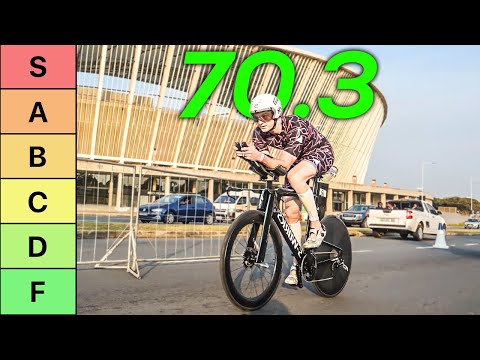

What are the five most common mistakes I see athletes make at their first 70.3 (half Ironman)?
So you've done it. You entered your first race and you completed it. You had a bun fight in the water and got kicked and punched. You came through transition beaten up, with wet, sandy feet. People passed you on the bike like you were standing still, like rocket ships. Then you were half dead on the half marathon and had to walk a lot.
Now you're addicted, and you're determined to fix it.
In this article I'll cover some simple things I see time and time again with my athletes, and certainly with newcomers to the distance. They're easily fixed for your second or third 70.3. If that's you, read on - I'm sure you'll learn something you can apply in your next race.
1. Getting Into the Wrong Swim Start Pen
The first mistake comes right at the start of the race. For a long time now, Ironman has self-seeded athletes into start pens by expected swim time. For a half Ironman swim, that means pens such as under 30 minutes, under 35 minutes, 35 to 40 minutes and so on.
If it's your first time, you have no idea how long the swim will take, and you normally fear this part of the race. It's open water, there are a few hundred of you, and a handful of athletes are sent into the water every couple of seconds. The pen system exists to give you less anxiety.
What happens is that people overestimate their swim time. They say they'll swim 35 minutes, but they're really a 40-minute swimmer, so they line up in the sub-35 pen. This happens at roughly 60–70% of races. The humble athletes tend to be realistic: "I'm around 34 or 35 minutes, so I'll hold back, go in the 35 to 40 pen and swim my way through feeling relaxed." What actually happens to them is that they get held up all the time.
People say they're a sub-30-minute swimmer when they're really a 32 or 34, because they want to get to the front and out of the way. But it messes up everyone else's race. You end up swimming over bodies, you ruin other people's swims because they panic when you go over them, and you get super frustrated yourself as your heart rate climbs with tension.
So get in the right pen. If anything, move up into a slightly faster category, because you get pulled along once there are plenty of swimmers in front of you. Unless you're in the sub-25-minute group, you'll have people ahead of you anyway. And if you come from a swim background and know you can get away from the crowds, don't hold back just because you're a weaker cyclist. Get up to the front and back yourself.
Get in the right start pen. If anything, move up into a slightly faster category.
Ideally you'll also have practised some open-water swimming in training, unless you're coming straight from cold weather and can't get into open water.
2. Over-Biking (and Skipping Transition Practice)
Your preparation felt superb, and you thought you could conquer everything on race day. You'd covered 70–80 km in training, perhaps even the full 90 km (56 miles), so you were confident. It isn't a super long day, and the majority of first-timers will have a great one.
What I tend to see is that they over-bike. They don't understand the pacing strategy for 56 miles (90 km).
Pace the bike by feel, power or heart rate
It's easy to say "hold back" or "see how you feel", and feel really is everything. But some of us use power meters, and some of us use power and heart rate together. There are plenty of theories about what percentage of your threshold you should ride at.
If you're a seasoned 70.3 athlete, intermediate or above, you can probably work at a higher percentage. If you're a beginner on your first or second 70.3, you're better off holding back and under-biking, because you'll have more legs and carbohydrate stores for the run. You're better off coming off the bike thinking "I should have ridden harder" - it means you probably got your pacing right.
In terms of power, I like to get people riding in a fairly big range: 85 to about 91% of their true threshold. If you ride as hard as you can for 45 minutes up to an hour, that's technically your threshold on the bike - ideally outside, in an environment you're used to. If you can't do that, you can test on a turbo and work as a percentage of the result. If you've done the training to get there, riding at this level should save your legs and spare some glycogen, some carbohydrate, for the run.
The same applies if you're working with heart rate, at a slightly higher percentage of your threshold heart rate: 86 to 91%, and nearer the lower end if you're a beginner or a first-timer. Treat 100% as roughly your Olympic-distance heart rate, or the average heart rate you can hold for 45 minutes to an hour on the bike. Working at 86–91% of that is a nice, safe place to be. If you're unsure, work at the low end and keep your ego at bay.
Practise your transitions
Alongside the bike, I'm including transition training here, because a lot of people ignore it, certainly beginners. They storm out of the water and run really fast because they want to make up time - perhaps they're a good runner and they lost time in the swim. But all the blood is in your upper body and there's nothing really in your legs. You may have kicked the last few hundred metres, and going upright changes your blood pressure, so your heart rate goes through the roof.
Then you get on the bike with your heart rate in the 160s, because you haven't practised the transition and all the faff it takes: getting your bag, putting your helmet and race belt on, wheeling your bike out. Often that's a couple of hundred metres of jogging with your tri bike or road bike through transition, heart rate up the whole time, feet dirty and sandy, perhaps slipping about.
Practise this. I promise you it's gold - it's just free time. Like anything, it's a bit like driving lessons: do six of them and you can drive a car.
3. Getting Your Fuel and Hydration Wrong
I can't not touch on fuel and hydration. I won't go into depth here, but this is what I find: athletes train on their carbohydrate drink - a 6% solution, for example - and perhaps some gels. Then on race day they either overdo it on the bike, because it's race-simulation day, or they undercook it, because they don't like the sweetness or haven't dialled in and practised what they'll use at least four or five times.
If you overdo the carb drink or the gels, or both, you get slushy and bloated, and you pay for it when you get upright and start running.
You need a proper fuelling strategy, and now you've done your first one you know what to work on. Understand what's on the race course, because that's easy to work with. Tools such as Precision Fuel & Hydration make it easy to separate out your hydration and your fuelling, so you understand what you're actually doing and get used to the grams per hour you're going to target.
Start low and build up. Higher is not better, especially if you're a beginner. You're working at a slightly lower percentage, so you don't have to burn through as much, and less really is more. Most of us overdo it.
4. Not Understanding the Course
This one is completely underrated. Don't just glance at the map and think "I'm great on hills". You need to understand where the aid stations are, what the wind is probably doing, and what the sun and weather will be like on the day, which you'll know a couple of days out.
There are great apps available that show where you might have a headwind. When you have a headwind, you have to push into it - it's like going uphill. But when you have a tailwind, that's when you get really aerodynamic and rest. It's a good time to eat some solids and bring your heart rate down. That's how you balance out your race.
If you get the chance to recce the course, even better. Most of us travel to races and might only get there a day or two beforehand, but you might be able to ride part of it. If it's in a city, that may not be possible. Either way, watch some videos and read notes from other athletes online. It's all accessible now, and most people go in blind.
They think "I've ridden 60 km, so 90 will be okay". But things change after two hours of pushing at that intensity, and you might not be able to absorb the amount of calories you did in training. So understand where the aid stations are - there are normally two on a 70.3 - carry enough fuel for at least two hours, and know where you're going to get more on the course.
5. Running at the Wrong Pace
And of course the run is next, so no guesses for what I'm going to talk about. Athletes, and runners especially, go out at the pace they think they should hold - 5 minutes a kilometre, 8 minutes a mile - because they've done it in training, so they try to stick to it.
But what we realise is that you've woken up at 4 or 5 am, you've swum well outside your comfort zone, and you've biked fairly solidly for two and a half to three and a half hours in variable, normally hot, conditions. There's a fatigue and durability issue here. You're quite new to it, and you potentially don't have that engine yet.
So instead of going out at a set, prescribed pace, use feel - and you should know your feel - and understand what your heart rate is doing in terms of your zones. People don't build into the run. They go out at a pace they could sustain for 5 km, and at around 7 or 8 km the wheels come off, generally because of the sun and poor nutrition on the bike. Their stomach is slushy, they're not absorbing the gel, and they've taken the emergency Coke.
I always say: build into it. Get to 10 km, so roughly halfway (about 6 miles), and then ignore everything. I don't mind whether you go by heart rate or pace - go for it. Most people will then try to pick it up, but if anything they hold it or slow slightly, and your second half will generally be a bit slower.
If you can negative split and have the confidence to hold back, I promise you'll reel people in.
You paced the bike properly and held back on the first part of the run. For beginners it's about two hours of running on average, which is a really long time to be out there, especially after a hard bike.
Frequently Asked Questions
What swim start pen should I choose for a 70.3 (half Ironman)?
Choose the pen that matches your honest swim time. If anything, move up into a slightly faster category, because you get pulled along once there are swimmers in front of you. Overestimating your time and starting too far forward means swimming over other athletes and getting frustrated as your heart rate climbs.
How hard should I ride the bike in my first 70.3?
Hold back. If you're a beginner on your first or second 70.3, aim for roughly 85 to 91% of your threshold power, or 86 to 91% of your threshold heart rate, staying nearer the lower end if you're unsure. You'll have more legs and carbohydrate left for the run.
Is it worth practising transitions before a half Ironman?
Yes. If you haven't practised, you can get on the bike with your heart rate in the 160s after all the faff of getting your bag, helmet and race belt and wheeling your bike out. It's free time: like driving lessons, do six of them and you can drive a car.
How much fuel should I carry on a 70.3 bike leg?
Carry enough for at least two hours and know where you'll get more - there are normally two aid stations on a 70.3. Start with a lower grams-per-hour target and build up. Higher is not better, especially for beginners.
What pace should I run in a 70.3?
Don't go out at your training pace. Build into the run using feel and heart rate, get to 10 km (roughly halfway), then go for it. If you can negative split and have the confidence to hold back, you'll reel people in.
Final Thoughts: Fix These Five for Your Next 70.3
So there you have it: five common mistakes that I hope set you up to make improvements straight away in your next race. They're simple, and they're easily fixed.
I'd love to know how you get on. If you have any questions you need answering, feel free to get in touch and I'll try to help if I can. Best of luck at your next race. It's a great distance - you can do a few of them in a season - and I'll see you at the races.