Ironman Racing
10 Brutal Ironman Truths Every First-Time Athlete Needs to Know
What more than 20 years of endurance coaching and racing Ironman has taught me about pacing, nutrition, mental resilience and getting to the finish line.
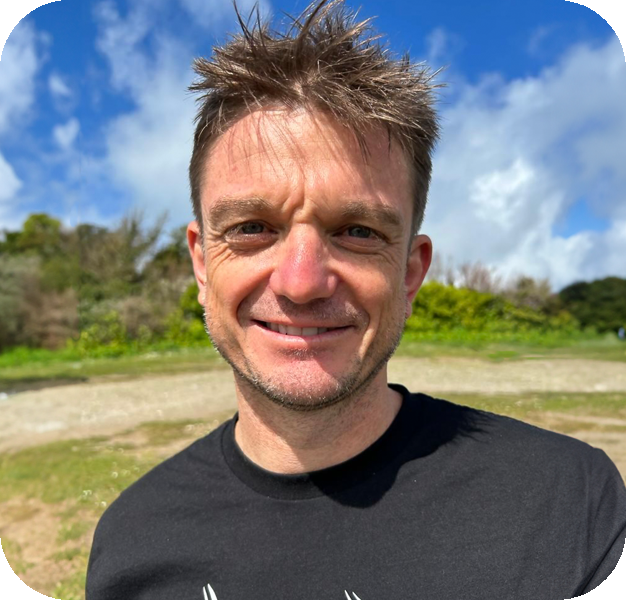
By Andy Brodziak, Head Coach & Founder
13 October 2026 · 17 min read
Everyone tells you how difficult an Ironman is. But very few people explain why it's so difficult until you've experienced it for yourself.
Training for your first Ironman is an enormous commitment. Months of swimming, cycling, running, strength work and making sacrifices around family and professional life. You'll spend countless hours preparing your body, following training plans and trying to build the fitness required to complete 3.8km of swimming, 180km of cycling and a full marathon.
But here's something I've learned from more than 20 years in endurance sport, both as an athlete and a coach.
Fitness alone will not guarantee a successful Ironman.
In fact, many first-time athletes arrive at the start line fitter than they need to be. Their biggest mistakes aren't necessarily made in training. They're made on race day, when excitement, adrenaline, ego and fatigue start influencing their decisions.
Having competed in more than 20 Ironman races, including qualifying for the Ironman World Championship in Kona, I've experienced many of these lessons myself. I've also watched countless athletes discover them the hard way.
Here are my 10 brutal Ironman truths that I believe every first-time athlete should understand before standing on that start line.
1. Your Fitness Will Never Compensate for Bad Pacing
This is arguably the most important lesson in Ironman racing.
Ironman punishes ego.
You might get away with slightly aggressive pacing in an Olympic-distance triathlon or even a 70.3. But over a full Ironman distance, those early mistakes will almost always catch up with you.
The problem is that most first-time athletes arrive at their race feeling incredibly fit. They've completed months of structured training, their confidence has grown, and suddenly they're thinking about finishing times, average speeds and personal bests.
Confidence is important. You've earned that confidence through your training.
But confidence and overconfidence are two very different things.
Ironman is not three separate races. It's one continuous endurance event, and how you execute the swim and bike will directly determine what happens during the marathon.
Swimming: Conserve Energy Rather Than Chase Time
The 3.8km swim is the shortest part of your Ironman day.
For beginners, the primary objective should be to exit the water feeling comfortable, composed and ready to ride.
If you're familiar with Critical Swim Speed (CSS), you'll understand that it's a useful benchmark for measuring your swimming fitness.
Your Ironman swim effort should be comfortably below your threshold intensity. For many first-time athletes, somewhere around 90–95% of threshold swimming speed may provide an initial guide, depending on swimming ability, endurance and open-water conditions.
For context, an athlete with a CSS pace of approximately 2:00 per 100m might be looking at an Ironman swim pace around 2:10–2:15 per 100m.
That's not a prescription, but it illustrates an important principle.
There's little benefit in gaining three or four minutes during the swim if it costs you significantly more energy and compromises your bike and run.
You want to exit the water thinking:
I probably could have swum a little faster.
That's usually a positive sign.
Cycling: The 180km Bike Is About Protecting Your Marathon
This is where I see the biggest pacing mistakes.
Many athletes come from a cycling background or have spent considerable time developing their cycling fitness. As a result, they feel comfortable riding relatively quickly.
But the Ironman bike leg isn't a standalone time trial.
I often tell my athletes to think of it as a long training ride with aid stations, where your primary responsibility is to preserve the ability to run afterwards.
For first-time athletes, a sensible starting point for cycling intensity might be approximately 70–75% of Functional Threshold Power (FTP), expressed as an Intensity Factor of 0.70–0.75.
Where you sit within that range depends on your cycling experience, the course profile, environmental conditions and your expected finishing time.
I like athletes to monitor what I call the three key pacing indicators:
- Power: What your legs are actually producing.
- Heart rate: How your cardiovascular system is responding.
- Rating of Perceived Exertion (RPE): How hard the effort feels.
These three measurements should work together.
If your power remains stable but your heart rate and perceived exertion increase considerably, something is changing physiologically.
That might be dehydration, heat stress, muscular fatigue or simply the accumulated cost of the race.
At the beginning of the bike, the effort should feel comfortably easy, perhaps around 2–3 out of 10 on an RPE scale.
Towards the end, the same power might feel closer to 4–5 out of 10.
That's normal.
What you don't want is to be riding at a comfortably hard effort during the first 50km, because that effort will almost certainly become unsustainable later.
Your Ironman marathon performance is largely a product of how intelligently you paced the bike.
Running: Patience During the First 10km Pays Dividends
The marathon is where most first-time Ironman races begin to unravel.
You've completed the swim, survived 180km on the bike, changed into your running shoes and suddenly feel surprisingly good.
This is dangerous territory.
You've tapered, you're excited, the crowds are cheering and your legs might initially feel fresher than expected.
It's tempting to settle immediately into the pace you've been running during your long training sessions.
My advice is to resist that temptation.
For the first 5–8km, focus on controlling your heart rate rather than chasing a particular pace.
Allow your running cadence and biomechanics to settle, keep your breathing relaxed and begin managing your body temperature.
Use the early kilometres to establish your hydration and fueling routine.
I've personally run close to a 3:08 Ironman marathon off a demanding bike course, and even with that experience, I've always found that patience early in the marathon produces a better overall result.
The first major target should be reaching halfway feeling reasonably controlled.
Then focus on reaching 30km.
If you've paced correctly and managed your nutrition, you may still have something left for the final 10–12km.
That is where the real racing begins.
There's something incredibly rewarding about overtaking athletes during the final stages of an Ironman because you had the discipline to hold back earlier.
Don't try to win your Ironman marathon in the first 10km. Save your best running for the final 10km.
2. The Swim Is the Shortest Discipline but Often Creates the Most Stress
It's remarkable how much anxiety the Ironman swim creates among first-time athletes.
In the months leading up to the event, athletes worry about open-water conditions, swimming in a crowd, waves, navigation and whether they'll be able to complete the distance.
These are legitimate concerns, particularly if swimming isn't your strongest discipline.
But consider the bigger picture.
For many athletes, the swim represents a relatively small proportion of the total race duration.
The difference between swimming slightly harder and slightly easier might only be a few minutes.
However, the physiological and psychological consequences of swimming too aggressively can be much more significant.
Fighting the water, swimming above your ability and allowing anxiety to elevate your breathing and heart rate can create unnecessary fatigue.
The objective is to develop sufficient swimming fitness and confidence that you can remain relaxed even when conditions become challenging.
Open-water practice is particularly important.
Swimming in a pool is predictable. Open water introduces variables such as visibility, temperature, waves, other athletes and navigation.
You need experience managing those conditions.
My advice is simple: calm swimming beats aggressive swimming.
You should finish the swim feeling that you've successfully completed the first part of a very long day, not as though you've just finished a standalone swimming race.
3. Your 'Easy' Bike Pace Is Probably Too Hard
One of the biggest surprises for first-time Ironman athletes is how easy the bike should initially feel.
If you're 20km into the ride and already describing the effort as comfortably hard, there's a good chance you're riding too aggressively.
I like to divide the Ironman bike course into three sections.
The First 60km: Establish Control
You've just exited the water, your heart rate may still be elevated and your body is transitioning into cycling.
Don't immediately chase your target average speed.
Allow your heart rate to settle, establish a comfortable position and begin following your nutrition strategy.
The Middle 60km: Find Your Rhythm
This is where consistency becomes crucial.
Settle into your planned power range, maintain good aerodynamics where appropriate and avoid unnecessary accelerations.
Be particularly mindful of hills.
A steep climb doesn't give you permission to significantly exceed your planned intensity simply because everyone around you is doing so.
The Final 60km: Prepare for the Marathon
By this stage, muscular fatigue will be accumulating.
Your power might decrease slightly even as your perceived effort increases.
That's not necessarily a problem.
The priority is to maintain control, continue fueling and prepare physically and mentally for the marathon.
If you've ridden intelligently, you should arrive in T2 feeling ready to run.
The bike might have felt conservative, and you may even wonder whether you could have ridden faster.
For a first-time Ironman, that's usually preferable to arriving in transition completely exhausted.
Remember, the fastest bike split doesn't necessarily produce the fastest overall Ironman.
4. Your Nutrition Strategy Could Be More Important Than Another Training Session
Ironman is sometimes described as an eating competition disguised as an endurance race.
There's a lot of truth in that.
You can arrive with exceptional aerobic fitness, but if you cannot consistently deliver sufficient carbohydrate, fluid and sodium across the day, your performance can deteriorate dramatically.
I've worked closely with Precision Fuel & Hydration since 2018, and one of the biggest lessons I've learned is that successful race nutrition is about much more than simply purchasing gels.
Athletes have numerous options available, including carbohydrate drinks, gels, chews, bars and other solid foods.
Different products have different carbohydrate concentrations, textures and delivery methods.
Some athletes prefer predominantly liquid nutrition on the bike. Others perform better using a combination of drinks and solid foods.
Neither approach is automatically better.
The most important consideration is whether your chosen strategy can be executed reliably at race intensity.
A nutrition plan written on paper means very little if you haven't tested it repeatedly during training.
Your gastrointestinal system needs to become accustomed to the carbohydrate quantities you're planning to consume.
You also need to establish how your hydration requirements change with the weather, your sweat rate and race intensity.
For a first-time athlete, I would rather see a slightly conservative but well-rehearsed nutrition strategy than an ambitious fueling target that hasn't been practised.
The majority of athletes don't fail because modern sports nutrition products are unavailable.
They fail because they don't have a sufficiently well-developed strategy, or they cannot execute it consistently.
Don't simply train your muscles. Train your ability to fuel the work.
5. Long Training Days Don't Automatically Prepare You for Mental Fatigue
We spend enormous amounts of time developing physical endurance.
We complete long rides, extended runs and increasingly demanding training blocks.
But mental fatigue is often overlooked.
Ironman creates a unique psychological challenge because of the sheer duration of the event.
You might wake at 3:30am, eat breakfast before sunrise and start racing around 6:00 or 6:30am.
Several hours later, you're still cycling.
By lunchtime, you may already have been awake for eight or nine hours, and you've still got a marathon ahead.
Personally, I've often noticed mental fatigue beginning to appear towards the final 40km of the bike.
At this point, concentration can become more difficult.
You start questioning decisions.
Am I riding too hard? Have I eaten enough? Why does my stomach feel uncomfortable? Should I increase my pace?
The problem isn't simply that you're tired.
Mental fatigue can reduce the quality of your decision-making at precisely the moment when intelligent decisions matter most.
This is something I believe athletes should prepare for.
Occasional early-morning long training sessions can help familiarise you with the demands of race day.
Appropriately programmed back-to-back training days may also help develop confidence in performing with accumulated fatigue, although they need to be balanced carefully against recovery.
Mental preparation should involve rehearsing difficult scenarios, learning to remain focused and building routines that reduce the number of decisions you need to make under pressure.
Caffeine can also have a role in maintaining alertness and reducing perceived effort, but it should be part of a planned strategy based on individual tolerance rather than something you introduce spontaneously on race day.
During the final days before an Ironman, prioritise recovery and sleep.
I've personally found short daytime naps beneficial during race week, particularly when travel, excitement and the demands of preparation have accumulated.
You cannot eliminate mental fatigue from Ironman.
But you can prepare yourself to manage it.
6. Something Will Go Wrong — and That's Okay
I can almost guarantee that something won't go exactly according to plan during your first Ironman.
It might be something relatively minor.
Your goggles start leaking, your nutrition bottle falls off the bike, your power meter stops working or you miss a bottle at an aid station.
Sometimes the problems are more significant.
I've experienced plenty of these moments throughout my racing career.
Ironman Boulder 2016: The Torn Wetsuit
At Ironman Boulder in 2016, I was warming up before the swim when the armpit of my wetsuit tore open.
It wasn't a small tear.
It was a substantial hole that could easily have caused panic immediately before the race.
But there was very little I could do about it.
Rather than wasting energy worrying, I accepted the situation and completed the swim.
Was I potentially a little slower? Quite possibly.
Did it ruin my entire race? No.
The lesson was simple.
You don't need everything to go perfectly to have a successful Ironman.
Ironman Barcelona 2013: When Emotion Took Over
Another memorable experience came at Ironman Barcelona in 2013.
I was chasing a strong finishing time and had borrowed an aerodynamic front wheel.
Heavy rain overnight had washed debris and grit onto the roads.
Around 20km into the bike, I suffered repeated punctures.
Eventually, I found myself standing on the side of the road, getting cold and increasingly frustrated.
A local resident kindly helped me, and I ended up replacing my aerodynamic front wheel with a fairly standard wheel from their garage.
I was able to continue racing.
But I made a mistake.
Instead of calmly adjusting my expectations, I became obsessed with recovering the time I'd lost.
I pushed far too aggressively.
My emotions took control of my pacing, and I paid for that decision later.
Looking back, the mechanical problem wasn't necessarily the biggest issue.
My reaction to it was.
That's an important lesson for every endurance athlete.
You cannot control everything that happens during an Ironman, but you can control how you respond.
Prepare for the unexpected.
Practise fixing punctures, understand your equipment and think through what you'll do if you lose nutrition or experience technical problems.
If something goes wrong, deal with it methodically and return to your original race strategy.
Don't allow one unfortunate incident to destroy the next eight hours.
7. Transitions Matter More Than You Think
Ironman transitions are often overlooked in training.
Athletes invest hundreds of hours improving their swimming, cycling and running, but spend very little time rehearsing what happens between the disciplines.
Yet transitions are part of the race.
A poorly organised transition can waste valuable minutes and create unnecessary stress.
I've seen athletes make all kinds of mistakes, including running out of T2 still wearing their cycling helmets.
The problem is usually rushing without following a familiar routine.
Transition is a skill, not simply a measure of fitness.
And like any other skill, it improves with practice.
Take time before race day to understand the transition layout, bag arrangements and equipment requirements for your specific event.
Rehearse the order in which you'll remove and put on equipment.
Small, local sprint and Olympic-distance triathlons can be excellent opportunities to develop efficient transition habits.
You don't need to sprint frantically through transition during your first Ironman.
But equally, there's no reason to spend 10 or 15 minutes sitting down unnecessarily.
I've seen Ironman World Championship qualification places decided by differences of less than a minute, including time lost during transitions.
My approach is straightforward.
Be calm, organised and efficient.
Move with purpose rather than panic.
8. Your Ironman Marathon Starts Before You Get Off the Bike
Most first-time athletes assume the marathon begins when they leave T2.
I would argue that it begins much earlier.
In practical terms, the final 40km of the bike is where you should already be preparing for the run.
This is a period when decision-making becomes increasingly important.
You need to assess how your body is responding.
Have you maintained your carbohydrate intake? Are you drinking according to your hydration plan? Is your heart rate behaving as expected? Are you beginning to experience gastrointestinal discomfort?
You've still got time to make sensible adjustments before transitioning into the marathon.
For a first-time athlete, the final 40km of cycling could take approximately 60–90 minutes, depending on ability and course conditions.
That provides an opportunity to assess your situation rather than simply pushing harder towards T2.
I've seen athletes at Kona produce outstanding bike splits only to struggle badly during the marathon.
Some are exceptionally talented cyclists.
They might ride close to professional-level bike times but then lose enormous amounts of time on the run.
Often, the problem isn't their running ability.
It's the accumulated cost of their cycling intensity.
They've spent too much of their available energy trying to achieve a particular bike split.
By the time they begin running, the damage is already done.
You cannot always reverse that damage by slowing down during the marathon.
That's why the final section of the bike should be treated as preparation for the run.
Check your nutrition, hydration, pacing and mental state.
The best Ironman marathon is often created by what you choose not to do during the bike.
9. Finishing Strong Is More Rewarding Than Chasing an Arbitrary Time
Triathletes are naturally drawn towards numbers.
We measure everything.
Power, pace, heart rate, training load, finishing times and age-group rankings.
That competitive mindset can be incredibly useful during training.
But it can also make us lose perspective.
When preparing for your first Ironman, it's easy to become fixated on a particular finishing time.
Perhaps you've decided that anything slower than 12 hours would be disappointing.
Or you've convinced yourself that you must finish within 14 hours because someone of similar ability achieved that result.
The reality is that every Ironman presents different challenges.
Course profiles, weather conditions and individual circumstances can influence your finishing time enormously.
I completed my first Ironman in Switzerland in 2008.
Although I achieved a very respectable result, looking back, I was probably too focused on the finishing time.
If I could revisit that experience, I would place greater emphasis on enjoying the entire day.
Because your first Ironman is a unique experience.
The atmosphere, spectators, volunteers and support from family and friends are things that stay with you long after you've forgotten your average cycling power.
There's also enormous satisfaction in finishing the marathon strongly.
Imagine reaching 30km and still being able to run with purpose.
You begin overtaking athletes who were significantly ahead of you earlier in the race.
Your confidence grows, your body is still responding and you realise that the discipline you demonstrated throughout the day is paying off.
That feeling is difficult to beat.
For your first Ironman, I would encourage you to focus on executing your own race rather than comparing yourself with everyone around you.
Let other athletes chase their targets.
Your job is to follow the strategy you've prepared.
You may be surprised how many of those athletes you eventually catch.
A well-executed Ironman is something to be proud of, regardless of what the finish-line clock says.
10. Ironman Isn't About Proving How Tough You Are
This is perhaps the most important truth of them all.
Ironman isn't simply a test of toughness.
It's a test of your ability to make sensible decisions while experiencing significant physical and mental fatigue.
There's a difference.
Anyone can decide to push harder when things become uncomfortable.
But sometimes, pushing harder is precisely the wrong decision.
The intelligent athlete understands when to back off, when to fuel, when to adjust their expectations and when to remain patient.
That requires discipline.
Ironman has a remarkable ability to humble even the strongest and most experienced athletes.
I've seen outstanding competitors unravel because they ignored the early warning signs.
And I've seen athletes with considerably less experience produce excellent performances because they respected the distance and executed their plans intelligently.
It's also important to recognise how challenging simply reaching the start line can be.
Months of preparation rarely unfold perfectly.
There are illnesses, injuries, work commitments, family responsibilities and unexpected interruptions.
For many first-time athletes, balancing the preparation alongside everyday life is one of the greatest challenges of the entire journey.
So when you finally stand on that start line, recognise what you've already achieved.
You've committed to something demanding.
You've invested time in your health and fitness.
You've demonstrated consistency through months of preparation.
Now your responsibility is to give yourself the best possible chance of enjoying the experience and completing the race successfully.
That doesn't mean everything will go perfectly.
It means remaining flexible, making good decisions and respecting the distance from start to finish.
Ironman doesn't reward the athlete who can suffer the most. It rewards the athlete who manages that suffering intelligently.
Final Thoughts: Respect the Distance, Trust Your Preparation
If there's one message I want every first-time Ironman athlete to take from this article, it's that successful endurance racing requires much more than physical fitness.
Your training provides the foundation.
But pacing, nutrition, emotional control and decision-making determine how effectively you use that fitness on race day.
You don't need to produce the fastest swim, the biggest bike split or an aggressive opening 10km of the marathon.
You need to put together one complete race.
And that means thinking beyond the discipline you're currently completing.
Swim in a way that protects your bike.
Ride in a way that protects your run.
And run in a way that allows you to reach the finish line with the satisfaction of knowing you executed your race intelligently.
After more than two decades in endurance sport, that's one of the biggest lessons I've learned.
Ironman isn't about how fast you can go at the beginning. It's about how well you can continue moving forward towards the end.
If you're preparing for your first Ironman and want a structured approach to training, pacing, fueling and race-day execution, explore the coaching options available through Tritanium Coaching.
My philosophy has always been that successful endurance performance starts with building a healthy, resilient athlete. The performance follows.
And remember, the smartest athletes learn these lessons before race day, not when it's already too late.
Preparing for your first Ironman?
Get a structured approach to training, pacing, fuelling and race-day execution with Tritanium Coaching.